
Trusted by world-class enterprises








Every CDM update touches thousands of charge codes. One wrong mapping between a CPT code and a revenue code means denied claims, delayed reimbursement, and compliance exposure — and your revenue integrity team finds it weeks later during reconciliation.
A provider's credentials expire. The workflow that should block scheduling doesn't fire because a patch changed how the rule evaluates. Patients get scheduled with non-credentialed providers. You find out when the payer denies the claim — or worse, during a Joint Commission audit.
340B split-billing configurations determine whether you buy at the 340B ceiling price or WAC. One misconfigured pharmacy, one wrong patient eligibility rule, and you're either overpaying by hundreds of thousands or facing HRSA audit findings and potential program exclusion.
The 21st Century Cures Act requires open APIs for patient access. Every ERP and clinical system update can break FHIR endpoints, patient matching logic, and data exchange workflows — and ONC enforcement is only getting stricter.
Your Medicare/Medicaid participation depends on validated, functioning systems. When CMS surveys, they test whether your systems actually work — not whether you have documentation. A single system failure during a survey can trigger an Immediate Jeopardy finding.
annual turnover in healthcare. Revenue cycle analysts, supply chain specialists, and clinical informaticists leave with knowledge of how your systems are actually configured — knowledge that never made it into any documentation.
Every CDM update touches thousands of charge codes. One wrong mapping between a CPT code and a revenue code means denied claims, delayed reimbursement, and compliance exposure — and your revenue integrity team finds it weeks later during reconciliation.
A provider's credentials expire. The workflow that should block scheduling doesn't fire because a patch changed how the rule evaluates. Patients get scheduled with non-credentialed providers. You find out when the payer denies the claim — or worse, during a Joint Commission audit.
340B split-billing configurations determine whether you buy at the 340B ceiling price or WAC. One misconfigured pharmacy, one wrong patient eligibility rule, and you're either overpaying by hundreds of thousands or facing HRSA audit findings and potential program exclusion.
The 21st Century Cures Act requires open APIs for patient access. Every ERP and clinical system update can break FHIR endpoints, patient matching logic, and data exchange workflows — and ONC enforcement is only getting stricter.
Your Medicare/Medicaid participation depends on validated, functioning systems. When CMS surveys, they test whether your systems actually work — not whether you have documentation. A single system failure during a survey can trigger an Immediate Jeopardy finding.
annual turnover in healthcare. Revenue cycle analysts, supply chain specialists, and clinical informaticists leave with knowledge of how your systems are actually configured — knowledge that never made it into any documentation.
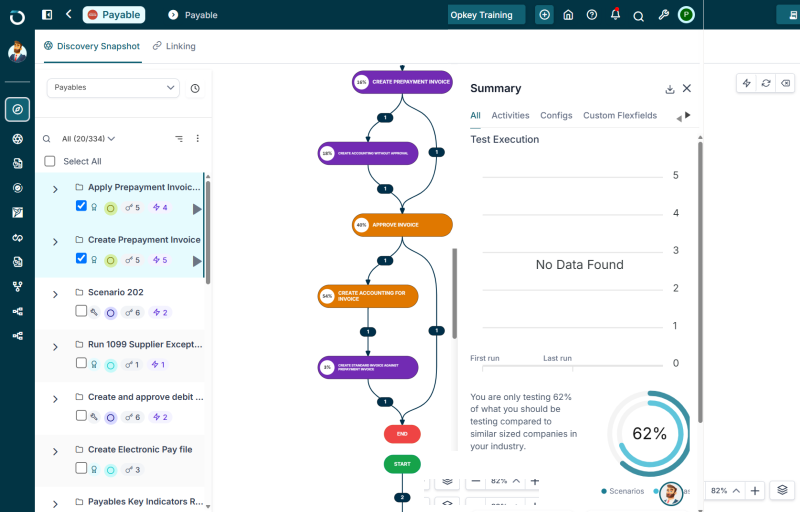
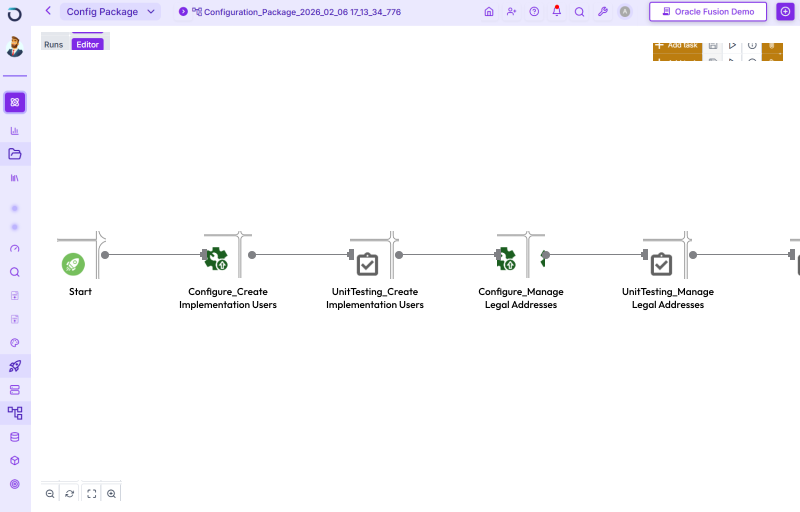
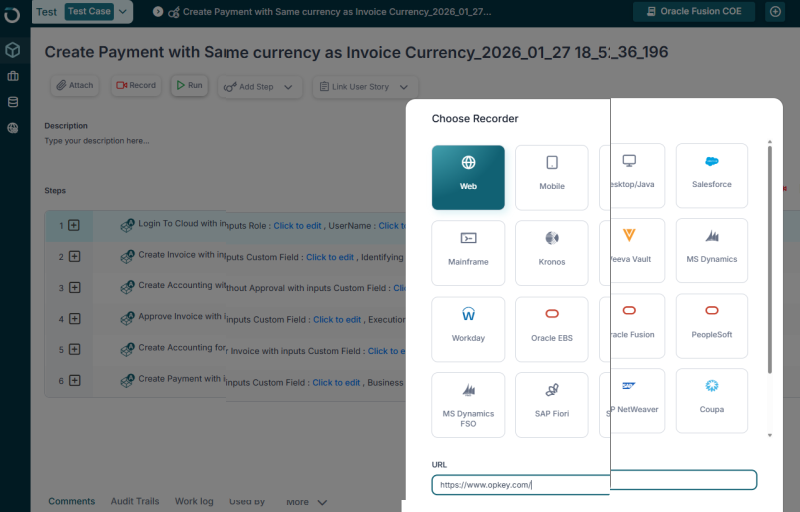
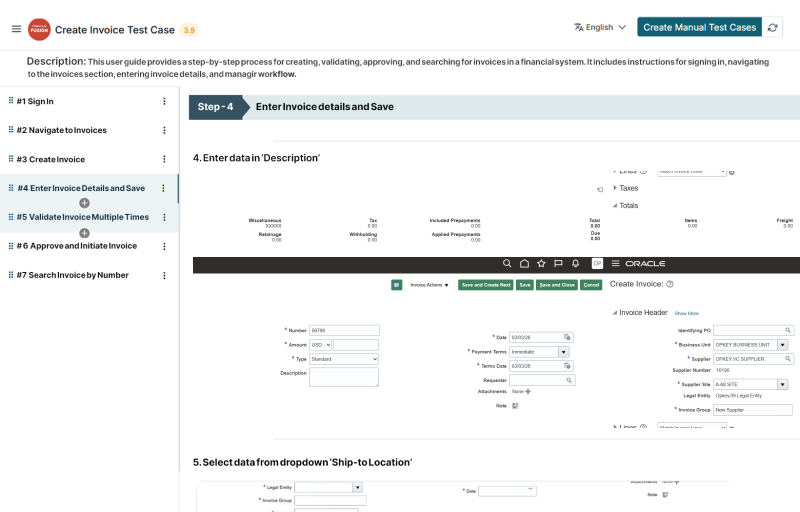
Trained on charge description master structures, CPT/ICD-10 mapping rules, payer contract configurations, denial management workflows, and revenue integrity patterns across major health systems.
Deep understanding of split-billing configurations, contract pharmacy arrangements, patient eligibility determination, accumulator logic, and HRSA audit requirements for 340B covered entities.
Credentialing workflow rules, privilege delineation, reappointment cycles, OPPE/FPPE trigger configurations, and payer enrollment processes specific to healthcare organizations.
Patient matching algorithms, FHIR R4 endpoint configurations, CCD-A document generation, ADT event processing, and 21st Century Cures Act compliance requirements.
OR preference card configurations, implant tracking workflows, formulary management rules, par level calculations, and clinical inventory management patterns specific to healthcare.
Conditions of Participation system requirements, survey readiness checklists, system validation evidence frameworks, and regulatory reporting configurations for Medicare/Medicaid compliance.
Trained on charge description master structures, CPT/ICD-10 mapping rules, payer contract configurations, denial management workflows, and revenue integrity patterns across major health systems.
Deep understanding of split-billing configurations, contract pharmacy arrangements, patient eligibility determination, accumulator logic, and HRSA audit requirements for 340B covered entities.
Credentialing workflow rules, privilege delineation, reappointment cycles, OPPE/FPPE trigger configurations, and payer enrollment processes specific to healthcare organizations.
Patient matching algorithms, FHIR R4 endpoint configurations, CCD-A document generation, ADT event processing, and 21st Century Cures Act compliance requirements.
OR preference card configurations, implant tracking workflows, formulary management rules, par level calculations, and clinical inventory management patterns specific to healthcare.
Conditions of Participation system requirements, survey readiness checklists, system validation evidence frameworks, and regulatory reporting configurations for Medicare/Medicaid compliance.

Everything you need to know about Opkey for Healthcare.
Opkey validates every charge code mapping, CPT/ICD-10 relationship, revenue code assignment, and billing determinant. When CDM updates happen or payer contracts change, Opkey runs the full validation automatically — catching revenue leakage before it reaches claims.
Yes. Opkey tests 340B pharmacy configurations, patient eligibility rules, accumulator logic, and contract pharmacy setups. When system updates change how eligibility or split-billing evaluates, Opkey detects the change and validates compliance before the next dispense.
Opkey continuously validates the system controls that CMS surveys test — credentialing workflows, access controls, clinical documentation processes, and billing accuracy. Validation evidence is generated automatically, so you're always survey-ready.
Yes. Opkey validates FHIR endpoints, patient matching logic, ADT event processing, and data exchange workflows required by the 21st Century Cures Act. When your EHR or ERP updates, Opkey ensures interoperability mandates are still met.
Argus isn't a generic AI running financial prompts. It's trained on actual healthcare operations — CDM structures, 340B configurations, credentialing workflows, CMS requirements, and revenue cycle patterns from hundreds of healthcare organizations. It understands the difference between a charge code mapping error and a benign configuration change.
Most organizations see impact within the first update cycle — reduced CDM-related claim denials, automated 340B compliance validation, and continuous survey readiness. Measurable results within 30-60 days.


