
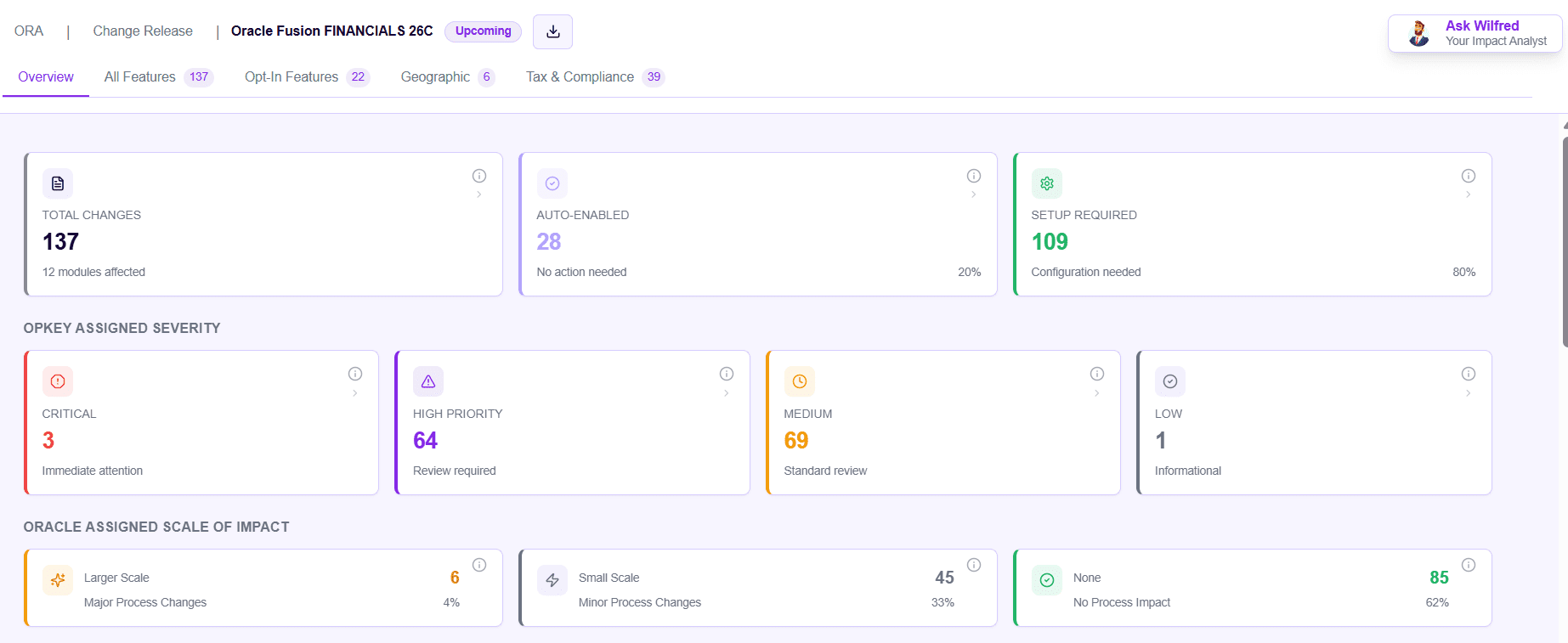
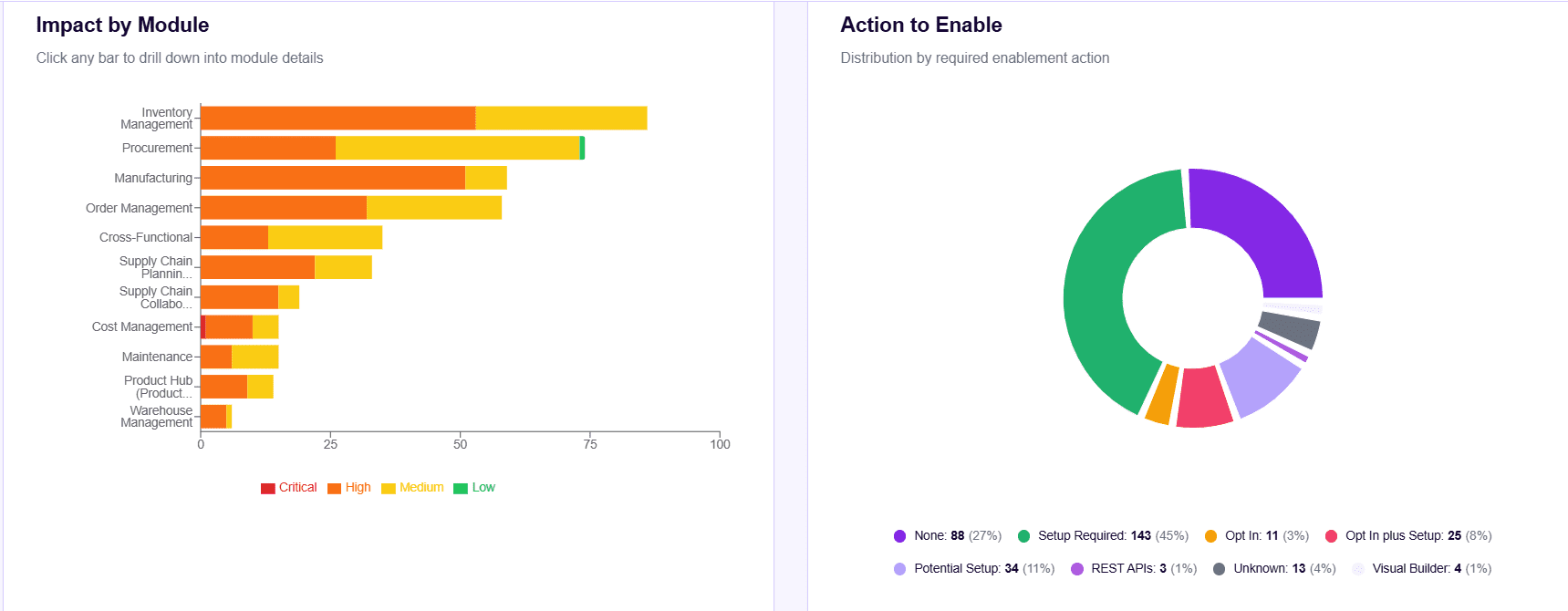
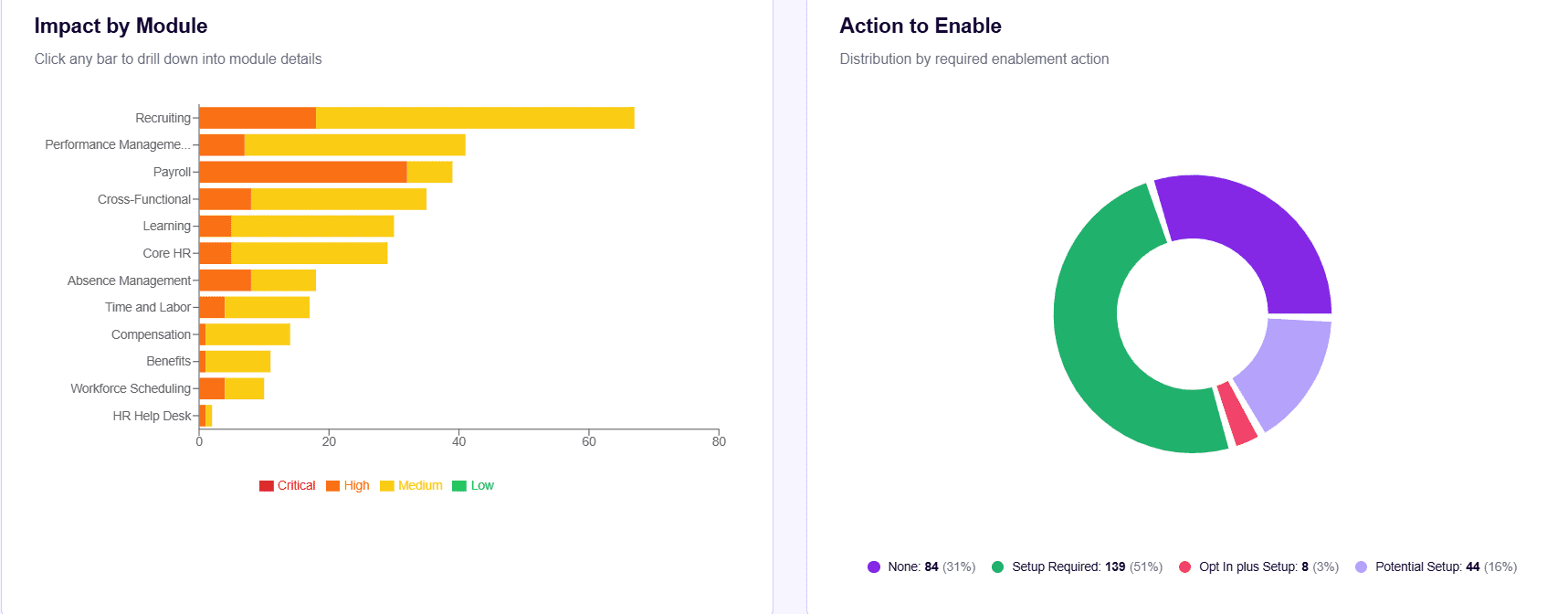
Oracle Cloud 26D is Oracle’s quarterly cloud update, with changes across Financials, Supply Chain Management (SCM), and HCM. It goes live in production on November 20, 2026. The release includes 763 changes: 172 in Financials, 286 in HCM, and 305 in SCM. Of those, 181 are auto-enabled. It also brings 66 AI and agentic features, which need change management planning, user training, and leadership sign-off before teams use them.
It’s a structured guide built on the official 26D release notes. It organizes every change across Financials, HCM, and SCM by module, role, and testing priority, so teams can act without reading the raw release documentation. It also covers critical compliance items, opt-in expiry dates, AI feature call-outs, and a prompt guide for Opkey Release Advisor.
Oracle’s release notes list every change in full. They’re thorough but linear, and reading across all three product families can take days. The Opkey advisory condenses them into role-based action views, testing tiers (regression, spot check, and monitor only), and enablement breakdowns. Each functional team can find what affects it in minutes.
26D has two critical items, both in Financials tax and receivables: <br><br>Tax authority calculated taxes for Brazil National Service <br><br>Compound tax rules for state and city taxes and VAT coexistence <br><br>Both need configuration and full regression testing before the November 20 go-live. SCM and HCM have no critical items in this release, though many of their changes are rated High.
181 changes across the three product families are auto-enabled. They take effect without a setup step, so teams still need to run spot checks to confirm that key workflows aren’t disrupted. Redwood UX changes fall into the same spot-check group.
Opt-in windows close permanently on November 20, 2026. The advisory tracks 10 Financials features, mainly fixed asset lease and project change request capabilities, and 10 manufacturing and inventory features in SCM. If you miss the window, you lose the choice.
Opkey turns the release notes into a three-tier testing plan: full regression for the two critical items and the high-severity changes that need configuration, spot checks for auto-enabled and Redwood UX changes, and monitor-only for medium and low items. Opkey AI agents generate test cases from the impacted features, runs automated regression against your Oracle environment, and tracks go-live readiness across all three product families in one dashboard.
Financials adds 11, HCM adds 38, and SCM adds 17. Examples include the Cash Processing Agents for bank reconciliation and cash positioning, the Payables Agent for invoice ingestion, Total Compensation Statement and Data Load Advisor in HCM, and the Inventory Budget Advisor and Supplier Portal Advisor in SCM. None are standard opt-ins.